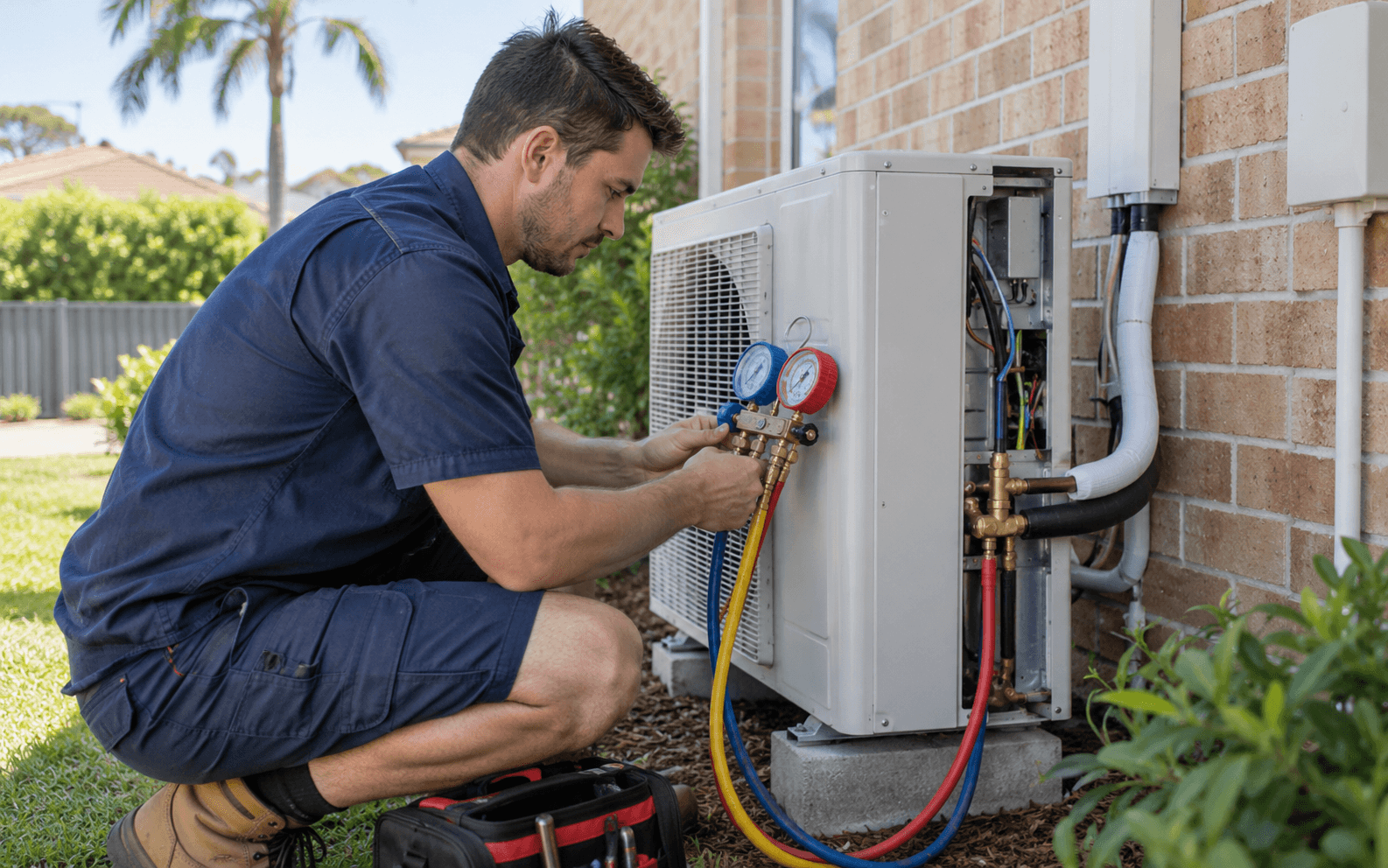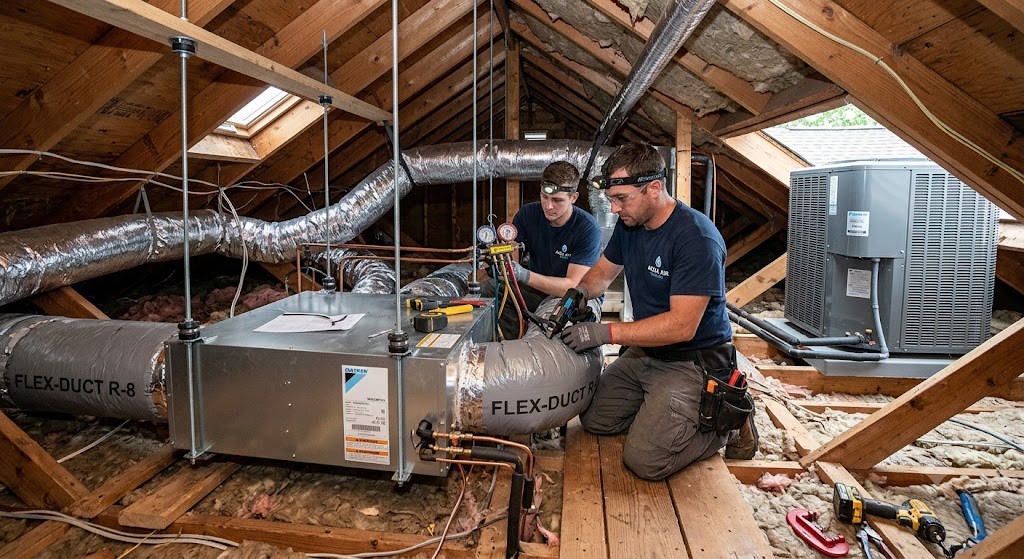
Your AC keeps turning on and off — a problem known as short cycling — usually happens because of dirty air filters, incorrect thermostat placement, low refrigerant levels, electrical issues, or an oversized air conditioning unit.
Short cycling not only reduces cooling efficiency, but it can also increase your energy bills, make your home uncomfortable, and cause long‑term damage to your air conditioner if left unchecked.
An air conditioner should run in smooth, steady cycles — not constantly switch on and off every few minutes. If this is happening in your home, it’s a clear warning sign that something isn’t right. In this guide, we’ll explain why your AC keeps turning on and off, what causes short cycling, and when it’s time to call a professional technician before a small issue turns into an expensive repair.
If you’re located in Brisbane, our team provides professional air conditioning service in Brisbane, including AC inspections, repairs, and full system diagnostics to fix short cycling and restore your comfort quickly and safely.
Common Reasons Your AC Keeps Turning On and Off
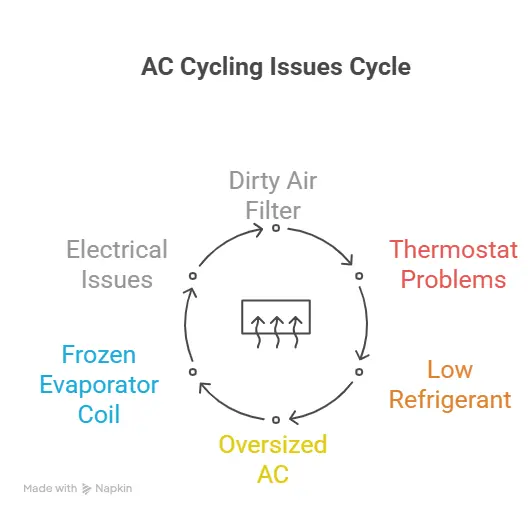
When your air conditioner keeps turning on and off frequently, it’s usually a sign of short cycling. Below are the most common reasons this happens, based on real‑world HVAC experience and competitor analysis.
Dirty or Clogged Air Filter
A dirty or clogged air filter is one of the most common reasons an AC system short cycles. When airflow is restricted, the system struggles to circulate air properly. This can cause the unit to overheat or shut down prematurely, only to turn back on a few minutes later.
Replacing or cleaning your air filter regularly is one of the easiest and most effective ways to prevent short cycling and improve overall cooling performance.
Thermostat Issues or Poor Placement
Your thermostat plays a crucial role in controlling when your AC turns on and off. If it’s not working correctly or placed in the wrong location, your system may cycle more often than it should.
Near heat sources:
If the thermostat is installed near windows, direct sunlight, kitchen appliances, or electronics, it may sense higher temperatures than the rest of the home and cause the AC to turn on and off unnecessarily.
Incorrect calibration:
An incorrectly calibrated thermostat may misread the actual indoor temperature, leading to frequent cycling even when your home is already cool.
Low Refrigerant Levels
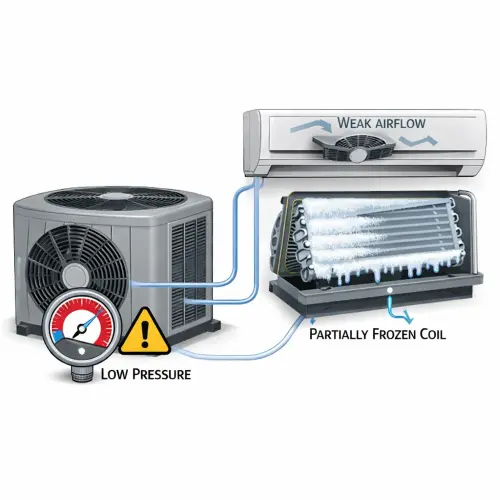
Low refrigerant is another common cause of short cycling and usually indicates a leak in the system. When refrigerant levels drop, your AC can’t remove heat efficiently, causing temperature imbalances and system shutdowns.
Leaks:
Refrigerant leaks reduce cooling capacity and prevent the system from operating normally.
Ice buildup:
Low refrigerant can cause the evaporator coil to freeze, forcing the system to turn off to prevent damage, then restart once it partially thaws.
Oversized Air Conditioner
An oversized air conditioner cools your home too quickly, reaching the set temperature before completing a full cooling cycle. As a result, the system shuts off and then turns back on shortly after.
This constant start‑stop cycle reduces comfort, increases energy consumption, and puts unnecessary strain on key components like the compressor.
Frozen Evaporator Coil
A frozen evaporator coil disrupts the cooling process and often leads to short cycling. When ice forms on the coil, airflow is blocked and the system may shut down repeatedly.
Restricted airflow:
Dirty filters, blocked vents, or duct issues can limit airflow and cause freezing.
Refrigerant problems:
Low refrigerant levels can also trigger coil freezing and repeated on‑off cycles.
Electrical or Control Board Problems
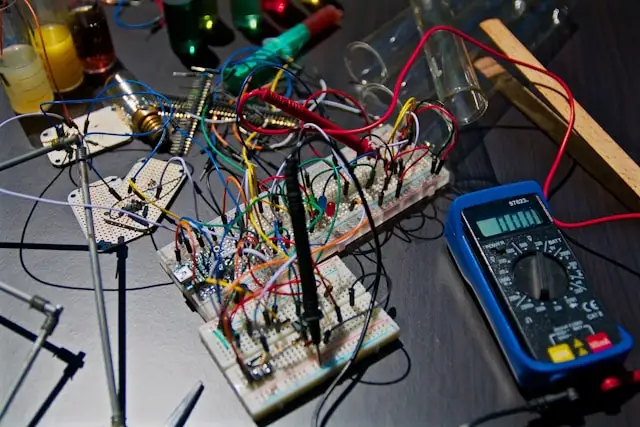
Electrical issues can cause your AC to behave unpredictably, including frequent cycling.
Faulty wiring:
Loose or damaged wiring can interrupt signals between components, causing the system to shut off unexpectedly.
Bad relays or sensors:
A failing control board, relay, or temperature sensor may send incorrect signals, forcing the AC to turn on and off even when cooling demand hasn’t changed.
Is Short Cycling Bad for Your Air Conditioner?
Yes — short cycling is bad for your air conditioner and should never be ignored. When an AC system turns on and off too frequently, it puts extra stress on critical components and reduces overall performance.
Damage to the compressor:
The compressor works hardest during startup. Frequent on‑off cycles force it to work overtime, increasing the risk of failure — one of the most expensive AC repairs.
Higher repair costs:
Short cycling often starts as a minor issue, like a dirty filter or thermostat problem. If left unresolved, it can lead to major component damage and much higher repair bills.
Reduced lifespan:
An air conditioner that short cycles regularly wears out faster, shortening its lifespan and forcing you to replace the system sooner than expected.
How to Fix an Air Conditioner That Keeps Turning On and Off
Fixing short cycling depends on the root cause. Some issues are simple and can be checked at home, while others require professional diagnosis.
Things You Can Check Yourself
Air filter:
Check your air filter first. A dirty or clogged filter restricts airflow and is one of the most common causes of short cycling. Replacing the filter may immediately improve performance.
Thermostat settings:
Make sure your thermostat is set correctly and in cooling mode. Check the temperature setting and replace the batteries if needed. Also confirm that the thermostat isn’t exposed to direct sunlight or nearby heat sources.
When You Should Call an HVAC Professional
If short cycling continues after basic checks, it’s time to call a professional. Issues like refrigerant leaks, electrical faults, frozen coils, or an oversized system require expert tools and experience.
If you need reliable air conditioning service in Brisbane, our licensed technicians can quickly diagnose the problem, fix short cycling, and help protect your AC from costly damage. Contact us today for fast, professional AC repair and servicing.
How Much Does It Cost to Fix AC Short Cycling?
The cost of fixing AC short cycling depends on the underlying problem and the condition of your system.
Minor fixes:
Simple solutions like replacing an air filter, adjusting thermostat settings, or recalibrating the thermostat are typically low‑cost and quick.
Major repairs:
Problems involving refrigerant leaks, electrical components, control boards, or compressor stress can be more expensive and may require professional repair or part replacement.
A proper inspection is the best way to determine the exact cause and cost.
How to Prevent Your AC from Short Cycling
Preventing short cycling is much easier — and cheaper — than fixing serious damage later.
Regular maintenance:
Cleaning filters, checking airflow, and inspecting components help your AC run smoothly and efficiently.
Annual servicing:
Professional annual servicing can catch small problems early and prevent breakdowns during peak summer heat.
Correct unit sizing:
Ensure your air conditioner is properly sized for your home. An HVAC professional can recommend the right system to prevent frequent on‑off cycles and maximize comfort.
When Is It Time to Replace Your AC Instead of Repairing It?
In some cases, repairing an air conditioner that keeps turning on and off is no longer the best option. If short cycling continues despite multiple repairs, replacement may be the smarter and more cost‑effective solution.
You should consider replacing your AC if:
- Your system is 10–15 years old or older and frequently breaks down
- Repair costs are rising and approaching the cost of a new unit
- The compressor has been damaged due to ongoing short cycling
- Your AC is incorrectly sized for your home
- Energy bills keep increasing while cooling performance declines
A modern, properly sized, energy‑efficient air conditioner can eliminate short cycling issues, improve comfort, and reduce long‑term energy costs.
Final Thoughts: Don’t Ignore an AC That Keeps Turning On and Off
An air conditioner that keeps turning on and off is more than just an annoyance — it’s a warning sign of an underlying problem. Short cycling affects comfort, wastes energy, and can lead to serious and costly damage if ignored.
Whether the cause is a dirty filter, thermostat issue, refrigerant problem, or a failing component, addressing the issue early can save you time, money, and stress. If basic troubleshooting doesn’t solve the problem, professional inspection is essential.
If you’re looking for trusted air conditioning service in Brisbane, our experienced HVAC technicians are ready to diagnose the issue, fix short cycling, and help you decide whether repair or replacement is the best option.
Contact us today to keep your home cool, efficient, and comfortable all summer long.
Need help with your system?
Explore air conditioning repairs, maintenance or installation options in Brisbane.