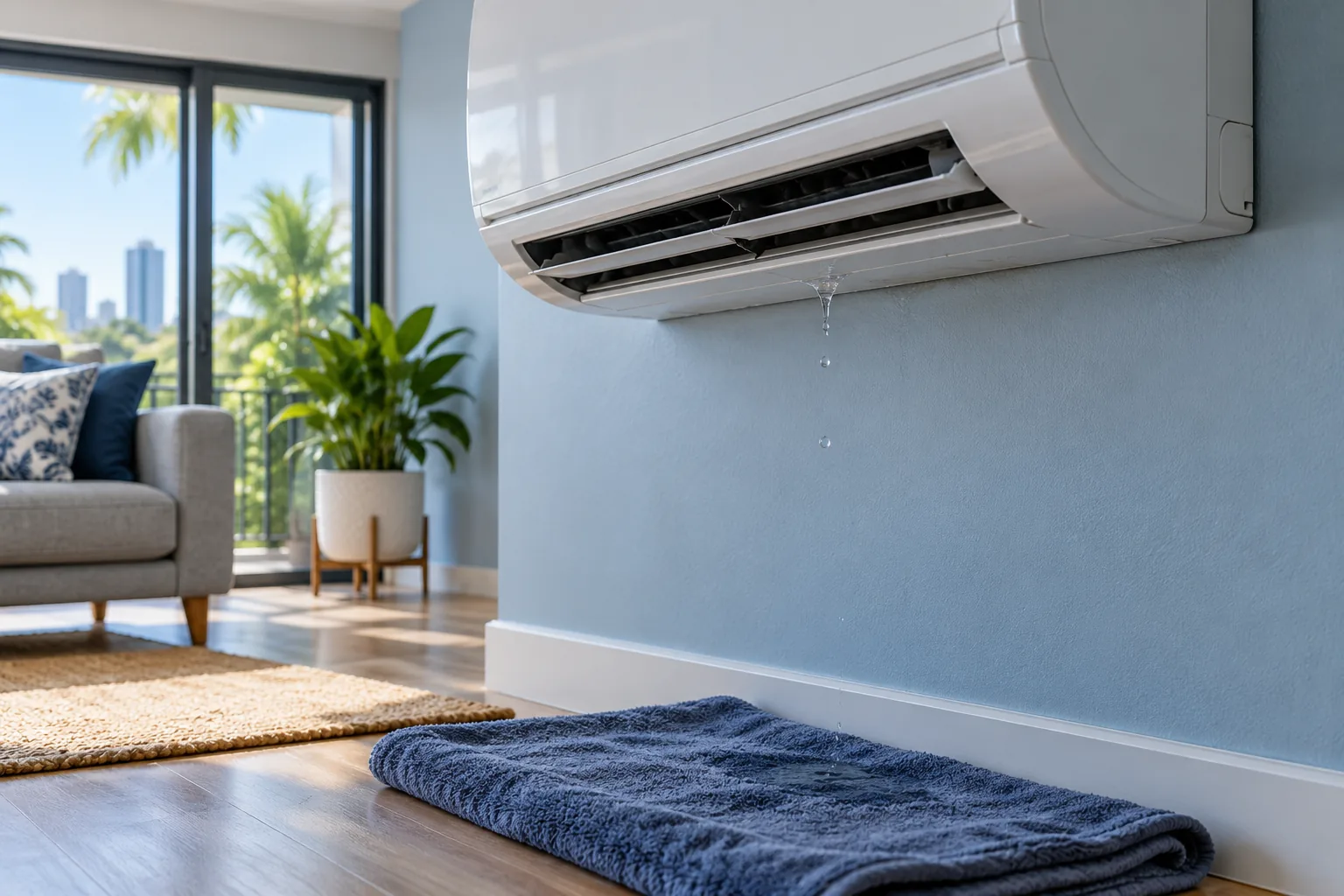
Water leaking from an indoor air conditioner needs attention even when the unit still cools. Protecting the room and avoiding electrical hazards comes before identifying the exact cause. A blocked drain is one possibility, but it is not the only explanation.
If water is near electrical equipment, a socket or wiring, keep clear and seek appropriate help. Do not touch wet electrical items or open the unit. DEZ Group can discuss an air conditioning repair assessment based on what you can safely observe.
Stop using the system when the leak could cause damage
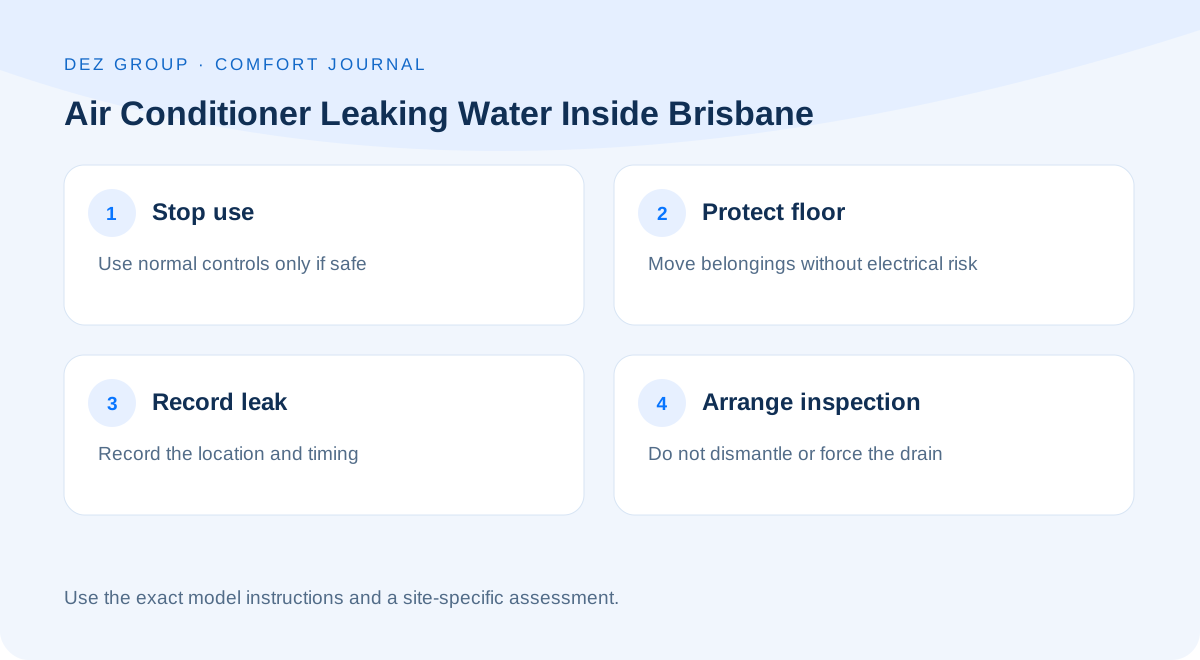
If safe to do so using the normal controls, stop the air conditioner and protect the area below without placing yourself near an electrical hazard. Move belongings only where it is safe. Do not position a container where it could fall, obstruct access or contact electrical equipment.
Where there is smoke, arcing, a burning smell or immediate danger, use the appropriate emergency response. Queensland electrical safety guidance is a useful starting point for understanding why water and electrical equipment need cautious handling. A comfort problem should not become a personal safety risk.
Understand why cooling produces water
An indoor coil can collect moisture from humid air during cooling. The system is designed to manage that condensate through a suitable drain arrangement. Water appearing from the wrong part of the cabinet or onto the wall is a sign that the normal path or operating conditions need checking.
An outdoor drain outlet releasing water during cooling can be normal, depending on the installation. That is different from water entering the room. Describe where the water appears instead of using the general statement that the air conditioner is leaking.
Record the pattern without dismantling anything
Useful observations include whether the leak begins quickly or after prolonged use, whether cooling seems weaker and whether ice is visible from outside the normal openings. Note any recent filter cleaning, building work or changes around the drain destination.
Take photographs only from a safe position. Record the indoor and outdoor model details if they are readily accessible. A clear account can help the technician plan the visit, while opening covers or pushing objects into a drain can create additional problems.
Recognise that several causes can look similar
Drain blockage, an unsuitable drain arrangement, a pump problem or water related to icing may produce overlapping symptoms. A dirty or restricted air path can also be relevant to some cases. The correct diagnosis depends on the actual equipment and installation.
Avoid assuming a new unit is needed before the cause is established. Equally, do not assume a quick drain clean will resolve every leak. Our guide to ice on an air conditioner explains why melting ice and drainage observations may need to be considered together.
Keep owner care within the manual's limits
A user-accessible filter can be inspected using the permitted procedure if the situation is safe. However, a leak is not a reason to remove electrical covers, use pressure to clear unknown pipework or pour household chemicals into the system. The drain route and equipment may not be what they appear to be from the room.
If you rent, notify the property manager promptly and follow the repair-authorisation process. Record any damage and the steps you took to report it. Our Queensland rental guide covers practical communication without treating every air conditioning fault as the same legal category.
Arrange the right follow-up
Tell the service provider that water is entering the room and describe any safety concerns. A leak assessment may require access beyond a routine clean. Ask what should remain switched off while waiting and what information would be useful for the appointment.
DEZ Group can discuss Brisbane repair support and arrange the next step. Contact the team with your suburb, the model if known and the leak pattern. After the issue is resolved, retain the findings and any drain or maintenance recommendations for future reference.
Common questions
Is water from an outdoor drain always a fault?
No. Condensate leaving through the intended drain can be normal during cooling. Water appearing indoors or creating another hazard needs assessment.
Can I keep cooling if the drip is small?
Do not assume a small visible drip means a small problem. Hidden water can damage finishes, and proximity to electrical equipment changes the risk. Ask for advice based on the actual situation.
Will cleaning the filter definitely fix the leak?
No. Filter condition may be relevant, but several faults can cause similar symptoms. A proper assessment is needed when the leak persists or the cause is uncertain.