Choosing an air conditioner size for a Brisbane room requires more than multiplying floor area by a rule of thumb. Two rooms with the same dimensions can place very different demands on a system. A shaded downstairs bedroom may gain much less heat than a west-facing living area under a warm roof.
Capacity selection should describe the space you want to condition and how that space behaves. Use rough online estimates to start a conversation, then arrange an installation assessment before purchasing equipment for a difficult or unusually exposed room.
Distinguish cooling output from electricity consumption
A system advertised as a particular number of kilowatts usually describes its cooling output capacity. That figure is not automatically the electricity it draws while operating. Electrical input changes with the equipment, conditions and operating load, especially with inverter systems.
This distinction matters both for sizing and for estimating bills. Selecting a larger output is not the same decision as accepting that exact number of kilowatts on your electricity meter. The Zoned Energy Rating Label helps compare relevant capacities and efficiency information. Compare equivalent equipment rather than mixing output and input figures.
Record the room's heat-gain features
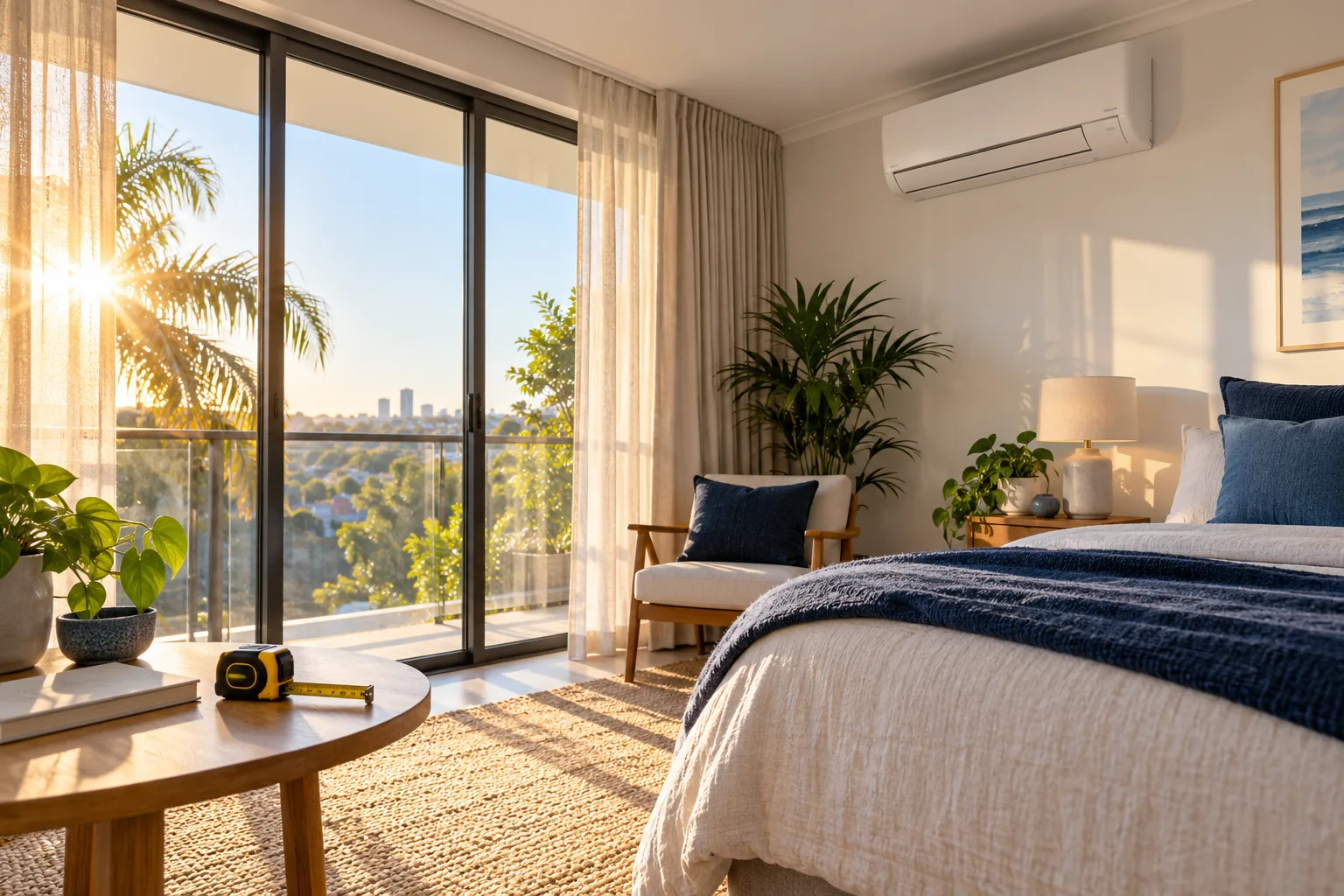
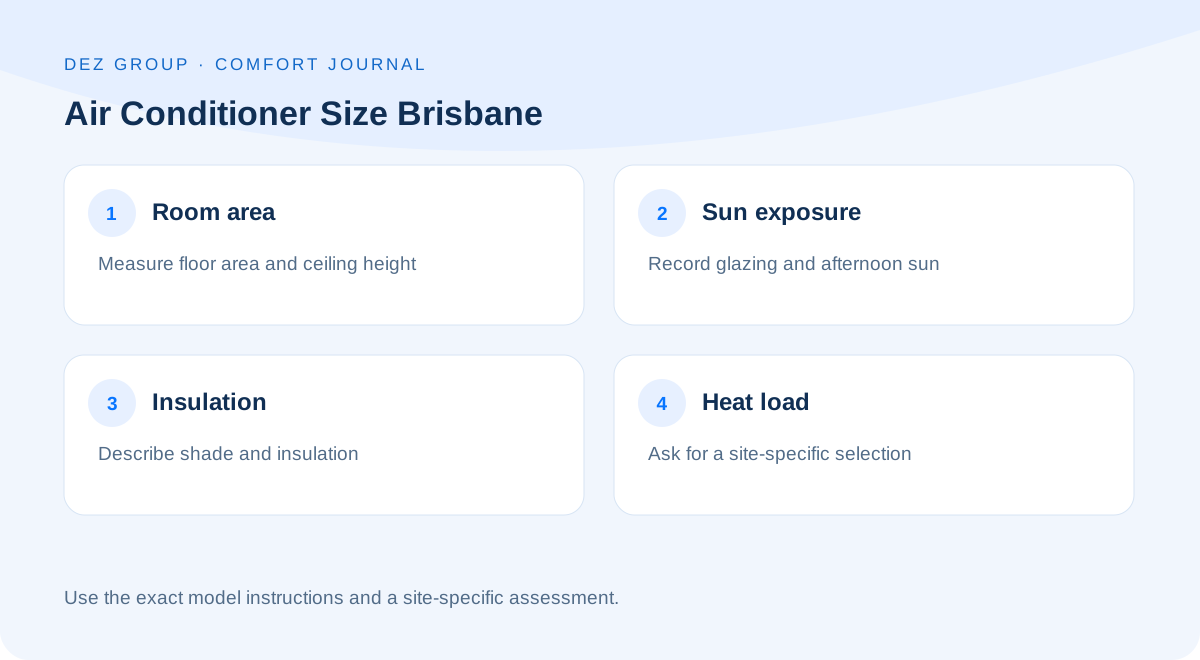
Measure the length and width and note the ceiling height. Describe windows, skylights, external walls, shading and the direction strong afternoon sun enters. Mention whether the room sits below a roof, above a garage or beside an unconditioned space. Existing insulation and curtains can materially affect the assessment.
Photographs are useful because a simple floor plan may miss a large glazed opening or an unusually high ceiling. If the air conditioner is expected to cover an open dining area or corridor as well, include those connected spaces. A unit serving an open-plan zone should not be sized as though all nearby doors will remain closed when they will not.
Include people, equipment and the way the room is used
A home office with computers and afternoon occupancy can behave differently from a guest room used occasionally at night. Kitchens introduce additional heat when cooking. A small commercial room with several people and equipment may require a different approach from a similarly sized domestic bedroom.
Explain the expected operating period. Bringing a hot room down to temperature after it has been closed all day is a different experience from maintaining comfort steadily. Set realistic expectations about how quickly the room should recover and how much of the building is meant to be comfortable at once.
Avoid choosing extra capacity as a substitute for design
Bigger is not automatically better. An unsuitable oversized system can be difficult to control at low demand. Depending on its operating range and controls, it may cycle more than expected and give less consistent moisture management. An undersized system may spend long periods working hard without reaching the comfort you expect during demanding weather.
The aim is appropriate capacity and useful modulation for the space. Ask how the recommended model was selected, what assumptions were made and whether its low-load behaviour suits a bedroom or smaller zone. The answer should refer to your room, not simply the next available size on a price list.
Consider placement and airflow before increasing the size
Poor distribution can feel like a capacity problem. A correctly selected wall unit may struggle to serve a space around several corners. Directing a larger airflow at a bed does not make a sleeping environment more comfortable. Furniture, partitions and the unit's mounting position all influence the result.
For ducted systems, room-by-room loads, outlet placement and the return path need consideration together. If one room is warm while the rest of the home is comfortable, investigate uneven ducted cooling before assuming the central unit is too small.
Improve the room where practical
External shade, suitable curtains, repaired draught gaps and better insulation can reduce avoidable heat gain. These improvements may also make an existing system more effective. Do not seal a building without considering its ventilation and moisture needs, particularly where bathrooms, kitchens or combustion appliances are involved.
Bring your observations to a quotation discussion: the hottest time of day, room temperature pattern, existing system details and whether humidity remains uncomfortable. DEZ Group can help you compare suitable systems and installation options and arrange a quote for the actual conditions at your Brisbane property.
Common questions
Can a square-metre calculator choose the final unit?
It can provide a starting point, but it cannot reliably account for every building and operating condition. An assessment is especially important for large glazing areas, high ceilings, poor insulation and connected rooms.
Does a high ceiling matter if the floor area is small?
Yes. Room volume, air distribution and the building surfaces gaining heat all matter. Tell the installer about the ceiling height rather than supplying floor area alone.
Should I buy a larger unit for the hottest day?
Discuss the expected conditions and the model's operating range with the installer. Buying the next size up without a heat-load assessment can create a different comfort problem rather than solving the original one.