
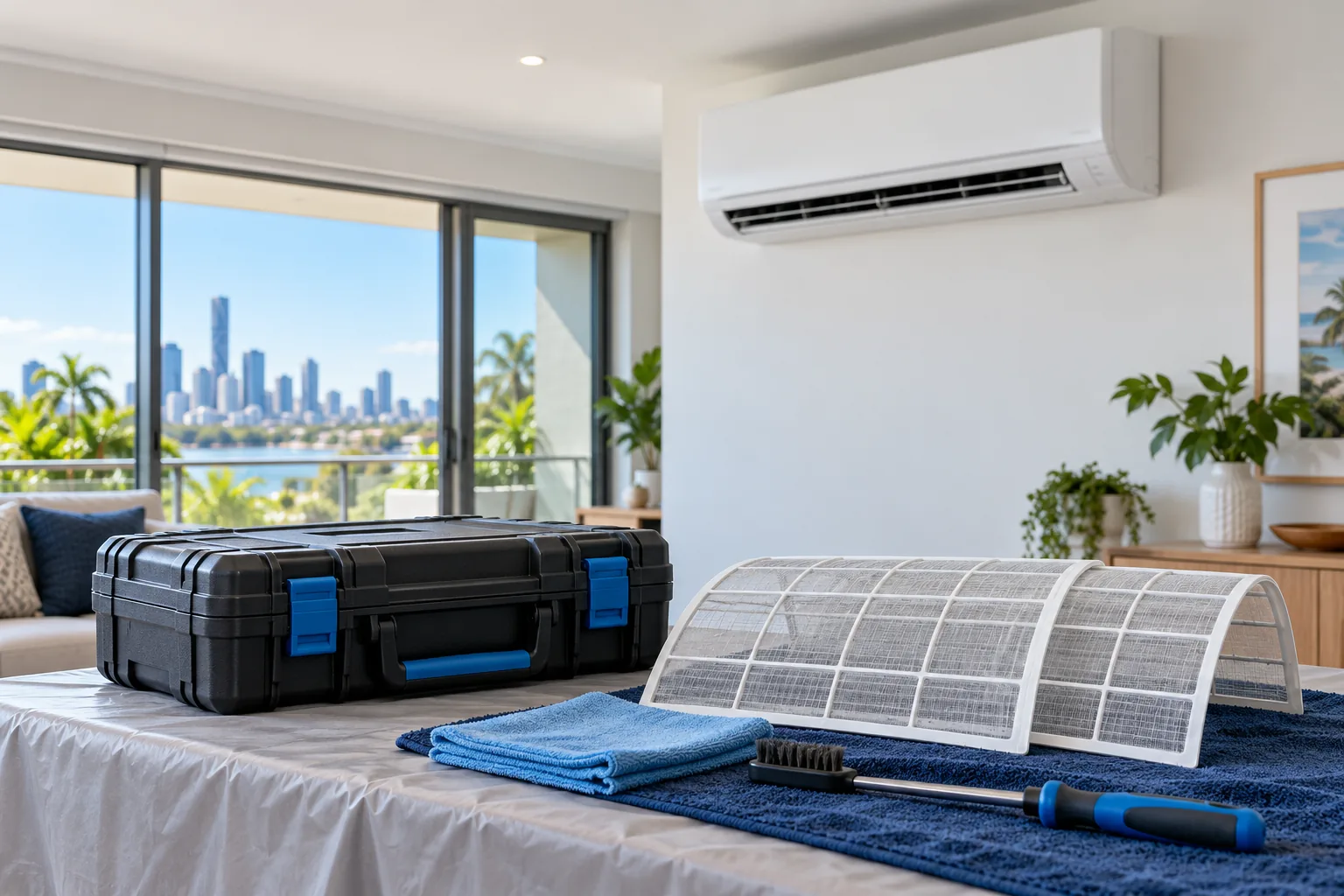
An air conditioning service should have a defined scope. The phrase can refer to anything from limited filter cleaning to a more involved inspection and clean. Before comparing prices in Brisbane, ask what the visit includes and what happens if a fault is discovered.
A useful maintenance booking starts with the equipment type, access conditions and any symptoms you have noticed. A standard maintenance visit is not automatically a full repair diagnosis or a guarantee that every concealed component will be inspected.
Confirm the equipment covered by the visit
State how many indoor and outdoor units are included, their approximate age and whether the system is split, multi split, ducted or commercial. Different arrangements need different access and work. A price for one wall unit should not be compared directly with a multi-room ducted visit.
Tell the provider about height, roof-space access, parking and any building rules. If the equipment is inaccessible or requires special access arrangements, that should be discussed before the appointment. A quotation based on ordinary access may not cover an unusual site.
Ask which cleaning tasks are included
Clarify whether the scope covers user filters, accessible surfaces, relevant coil cleaning or more involved cleaning of the indoor air path. The appropriate method depends on the equipment, condition and manufacturer instructions. A product described as a deep clean still needs a clear explanation.
Ask how surrounding furniture, walls and electrical components will be protected. Do not assume that stronger chemicals or more water automatically produce a better result. Where a persistent odour or visible contamination is the concern, explain it before the visit so the technician can assess what is appropriate.
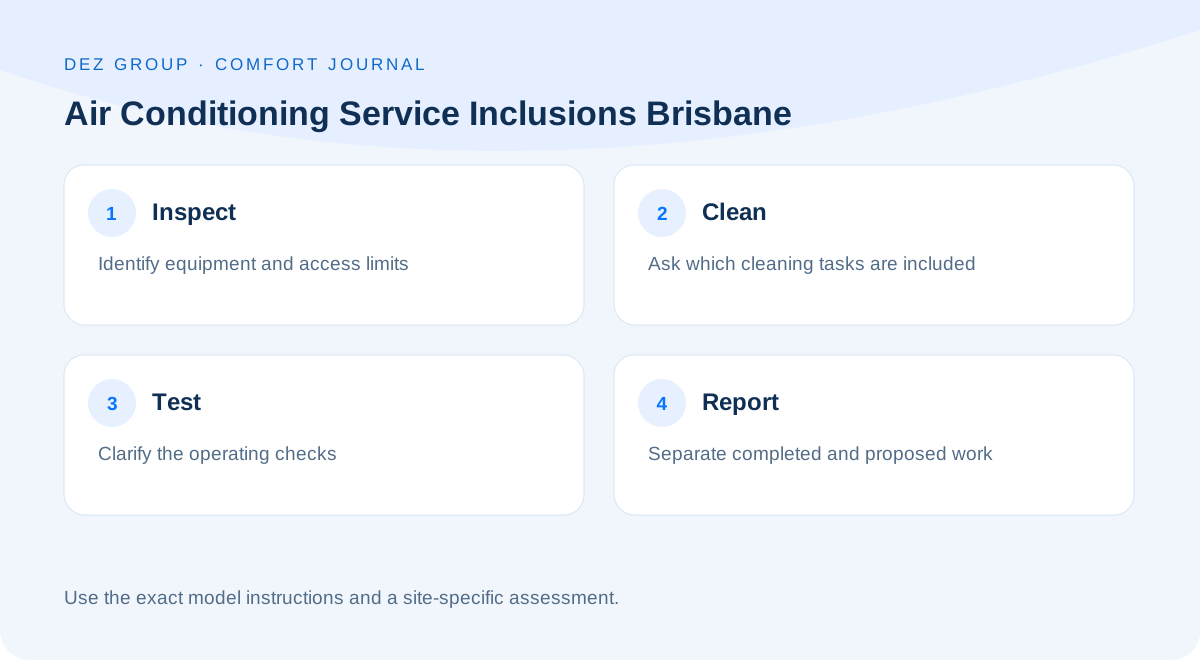
Include drainage and operating observations
A drainage check can be important when an indoor unit has leaked or moisture has appeared around it. Ask what will be checked and what remains outside the standard scope. Some drainage problems need separate access or repairs rather than routine cleaning alone.
Operating checks can help identify unusual temperatures, airflow, noises or controller behaviour. These observations should be interpreted in context. A single reading does not establish that every component is healthy, and a service should not be represented as a complete diagnostic assessment unless that work is actually included.
Separate routine maintenance from regulated work
Electrical and refrigerant tasks need the appropriate qualifications and scope. ARC's refrigerant licence information explains why work that risks releasing regulated refrigerant is not ordinary household cleaning.
Ask how a suspected fault will be handled. Will the technician explain the observation, provide a separate diagnosis or request approval for further work? A maintenance price should not be used to imply that replacement parts, leak repairs or electrical repairs are included when they are not.
Expect a useful report and clear next steps
A practical report identifies the equipment attended, relevant findings and any recommended follow-up. It should distinguish completed work from work that still needs approval. If a component appears questionable, ask how the recommendation was reached and whether further investigation is needed.
Keep the report with the operating manual and previous service records. This is especially helpful for property managers or workplaces where several people coordinate maintenance. A clear history can make future fault conversations more efficient.
Compare quotes using the same maintenance brief
Tell each provider the same equipment count, access conditions and concerns. Ask about inclusions, exclusions, cancellation arrangements and how additional work is authorised. The most useful quote is one you can understand before the technician arrives.
DEZ Group can discuss servicing in Brisbane and explain the next step for your equipment. If you are already experiencing a leak, unusual noise or poor operation, use the repairs enquiry and describe the symptom rather than booking on the assumption that a routine service will resolve it.
Common questions
Is a service the same as a filter wash?
Not necessarily. Filter care may be one part of the visit. Ask for the complete scope and the equipment included.
Should every service include adding refrigerant?
No. Refrigerant is not a routine consumable that should simply be topped up at each visit. Suspected refrigerant loss requires a suitable diagnosis and an assessment of the cause.
Can the technician repair a fault during the service?
That depends on the fault, authorisation, time and parts available. Ask how extra work is approved. Do not assume all repairs are included in the maintenance price.