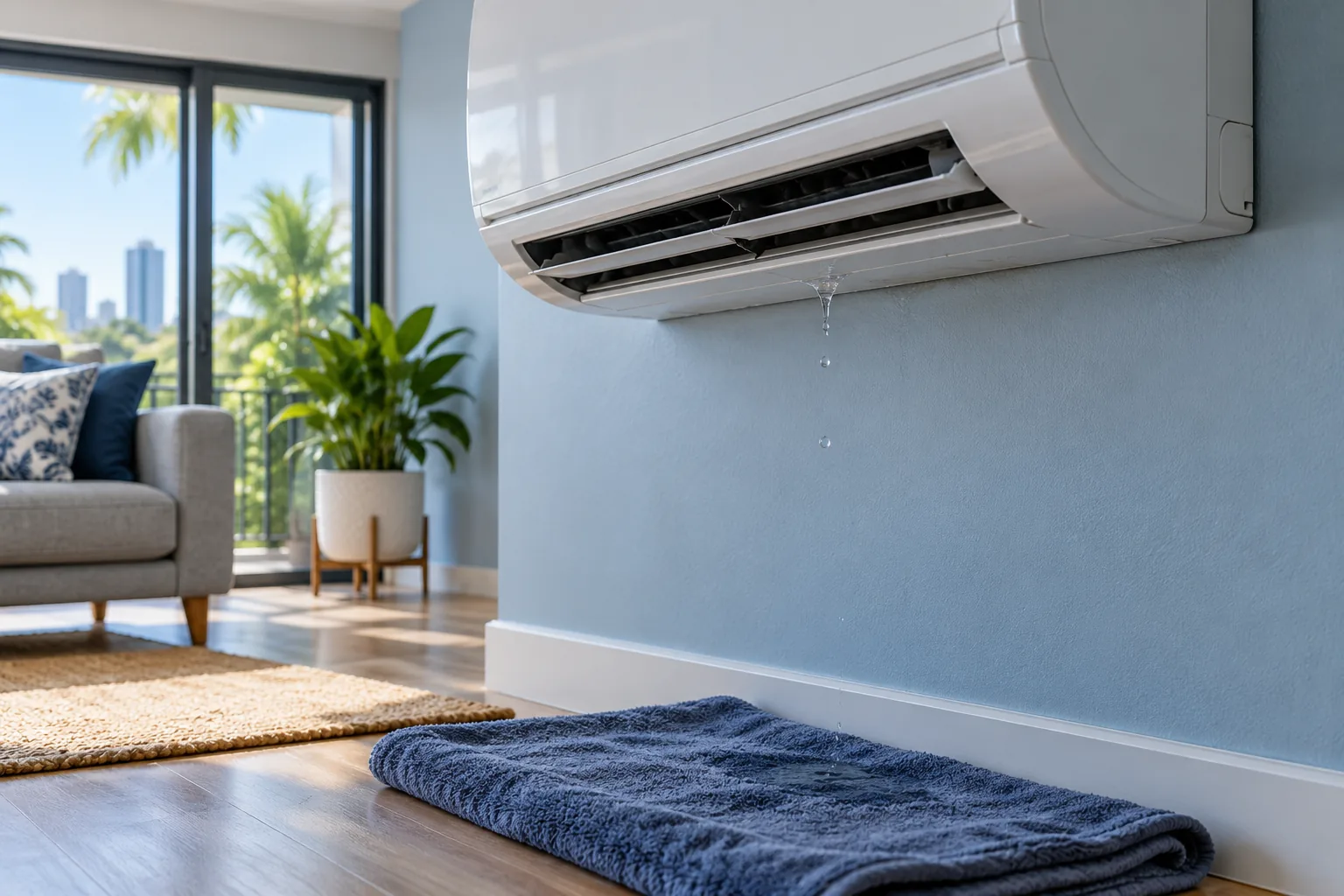

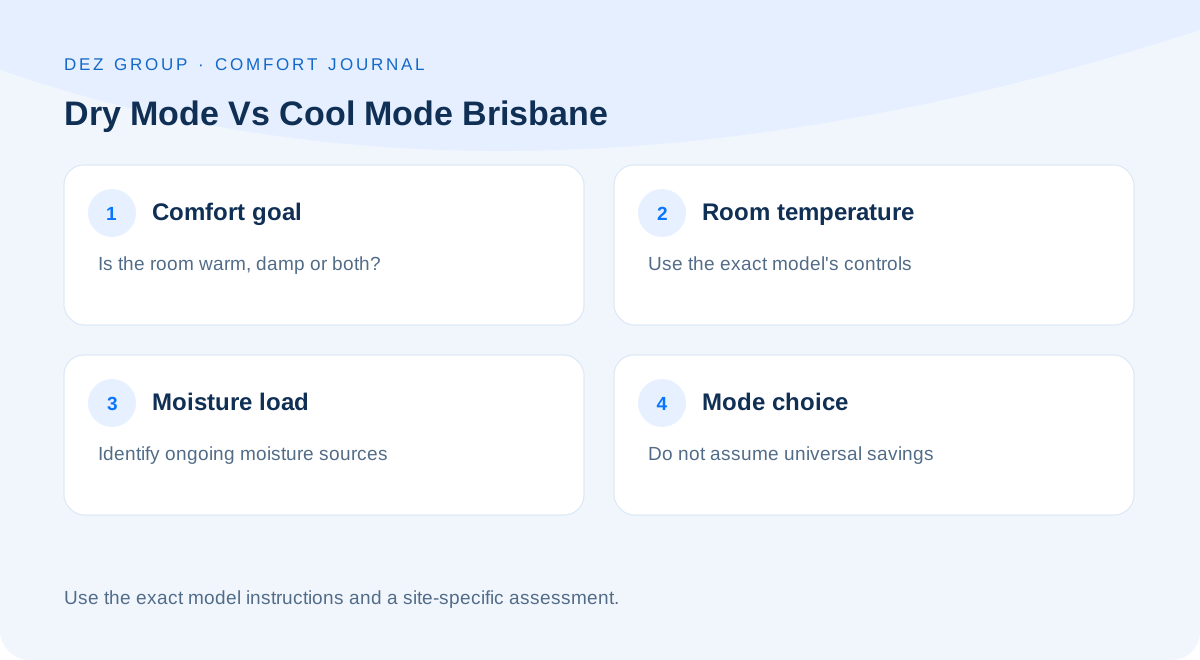
Dry mode and cool mode are not interchangeable labels for the same result. Cool mode is generally used to control room temperature, while dry mode is intended to prioritise moisture reduction under the conditions the manufacturer specifies. The actual operating pattern depends on the model.
In Brisbane's humid weather, the useful question is whether the room is too warm, too damp or both. Choosing a mode without identifying that problem can lead to a cold but uncomfortable room or an expectation the equipment cannot meet.
Start with the room's comfort problem
Notice the temperature, whether the air feels damp and whether humid outdoor air is continually entering. An inexpensive humidity meter can provide observations, but its accuracy and placement affect the reading. A single number does not diagnose a fault.
If the room is hot as well as humid, cool mode may be the practical starting point according to the manual. If temperature is already acceptable but moisture is the main concern, dry mode may be worth evaluating within the model's instructions. Avoid assuming one mode suits every Brisbane day.
Understand the limits of dry mode
Dry mode can use a controlled combination of compressor and fan operation to remove moisture. On some systems the available temperature or fan adjustments differ from cool mode. Those details are model-specific, so do not use a remote symbol as a complete operating explanation.
Check the manufacturer's operating information for the relevant brand and exact model. If the manual does not explain the feature clearly, ask the supplier. Dry mode should not be assumed to provide the same control or performance as a dedicated dehumidifier.
Avoid chasing humidity by lowering the set point
Making the set point progressively colder can create discomfort without resolving the moisture source. Open windows, wet laundry, inadequate extraction or a building leak may continue adding moisture. An air conditioner cannot substitute for fixing a separate water problem.
Likewise, very short operating cycles can affect moisture removal. Sizing, controls and the room's load can matter. If the room repeatedly feels cold and damp, discuss the pattern with a technician rather than simply choosing a lower number. The persistent humidity guide expands on those observations.
Consider airflow and occupied comfort
A fan speed that feels pleasant in one mode may not be available in another. Airflow direction can also change perceived comfort, especially near a bed or desk. Learn the permitted settings rather than overriding them through undocumented button combinations.
A ceiling fan can improve air movement for occupants where appropriate, but it does not remove moisture from the building. Use it as part of a comfort strategy, not as evidence that humidity has been controlled. Keep the air conditioner's own filters and openings maintained as directed.
Compare energy use carefully
There is no universal saving percentage for switching from cool to dry. Energy use depends on the model, temperature, humidity, settings and operating duration. A mode that uses less power at one moment may still run for a different length of time.
The running-cost guide explains how electrical input, hours and tariff combine. For general efficiency planning, the Australian Government's heating and cooling guidance also emphasises the building and operating habits, not a single button choice.
Seek advice when the pattern does not improve
Record the selected mode, approximate operating period and room conditions. Mention weak airflow, icing, water leaks or an odour. These details may distinguish an operating question from a maintenance or repair issue.
DEZ Group can discuss maintenance and repairs in Brisbane. Contact the team with your model and observations if normal operation does not provide the expected comfort. Do not assume an unresolved moisture problem can be corrected by mode selection alone.
Common questions
Is dry mode always cheaper than cool mode?
No fixed saving applies to every model and condition. Compare actual operating needs and the equipment instructions rather than assuming the name implies a lower bill.
Can dry mode make a room colder?
It can affect room temperature because moisture removal can involve cooling. The model's controls determine how that happens. Check the manual and evaluate the occupied comfort.
Should windows stay open while using the system?
Follow the equipment guidance and the building's ventilation needs. Continually introducing humid outdoor air can add to the moisture load, but ventilation and other moisture sources still require appropriate management.