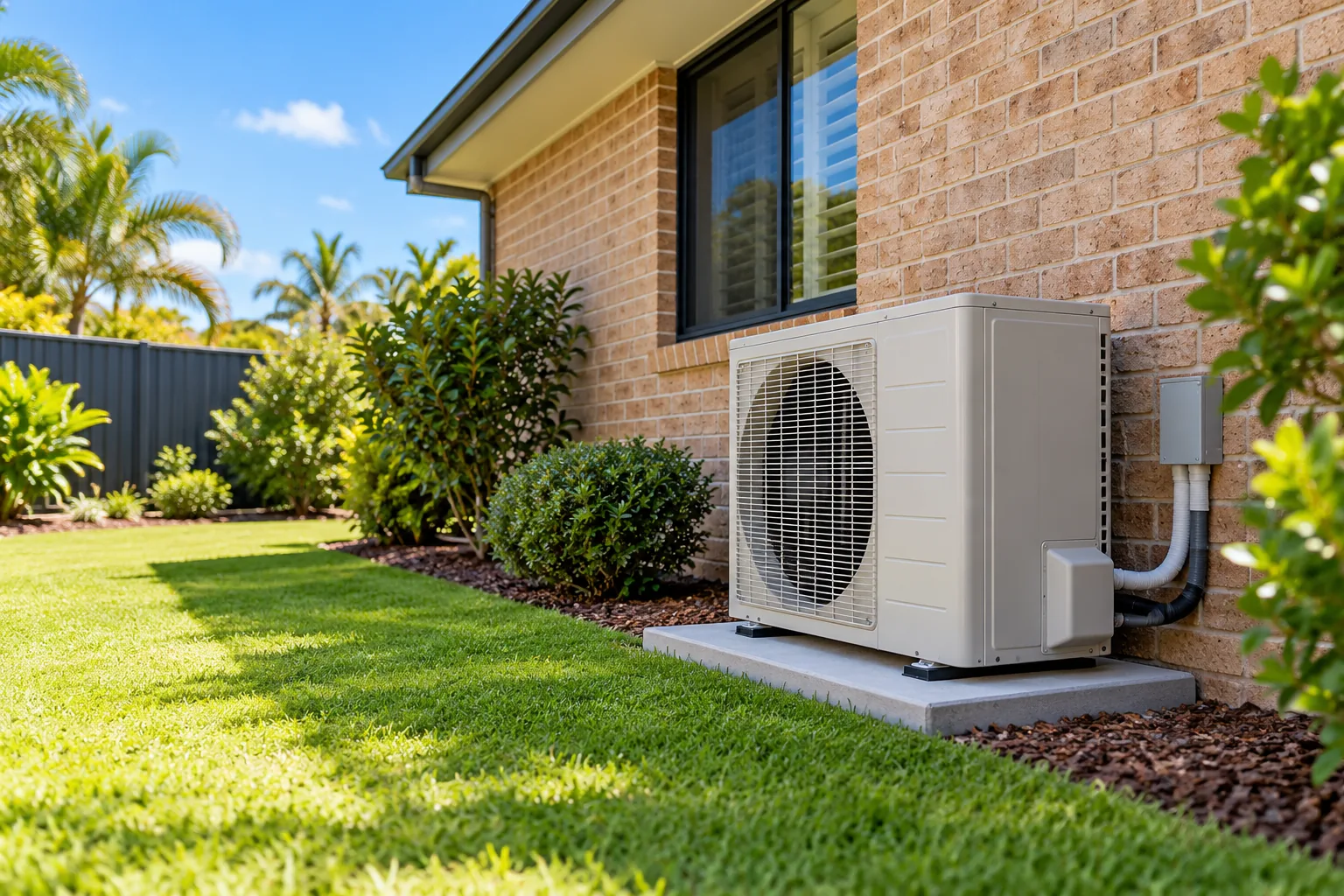
Outdoor air conditioner placement affects more than appearance. The outdoor unit needs to move air, release heat, drain appropriately and remain accessible for servicing. A position hidden behind a tight screen may look neat while making the equipment harder to maintain or operate effectively.
For a Brisbane installation, assess the location before choosing a mounting arrangement. Start with the manufacturer's requirements for the exact model, then consider the building, property boundary and neighbouring rooms. DEZ Group can discuss these constraints as part of an installation assessment.
Leave clear space for the equipment to breathe
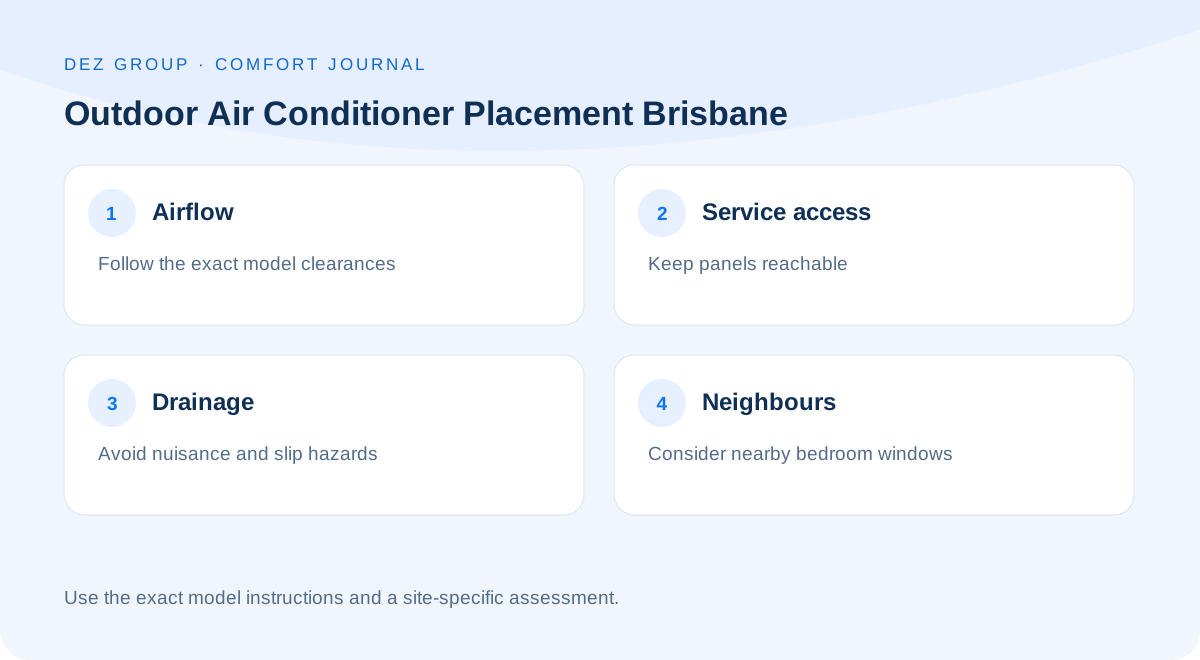
An outdoor unit exchanges heat with surrounding air. Blocking its intake or discharge can cause discharged air to recirculate and reduce useful heat rejection. Plants, storage boxes, narrow passages and decorative screens can all become problems when the required clearances are overlooked.
There is no single clearance figure that suits every unit and layout. Ask the installer to check the model's installation manual, including arrangements with obstacles on more than one side. A larger screen is not necessarily safe simply because it has some gaps. The whole airflow path matters, including what happens when vegetation grows or garden furniture is moved.
Consider neighbour noise before the first hot night
A condenser close to a neighbour's bedroom or a reflective wall can become more noticeable at night. Brisbane City Council publishes air conditioning noise guidance. Its assessment concerns noise at an affected property and the background conditions, not just a catalogue sound figure beside the machine.
Ask how the proposed location, operating pattern and mounting surface could affect sound. A quiet mode may reduce some operating noise, but it is not a substitute for a considered location. Avoid treating a phone sound-meter reading as proof of compliance. Equipment selection and site-specific advice belong in the planning stage.
Choose a secure and serviceable mounting arrangement
A ground slab, stand or wall bracket must suit the equipment and building. The support should not introduce avoidable vibration or leave the unit vulnerable to movement. Wall-mounted equipment also needs an assessment of the wall and safe access for both installation and future work.
Servicing access is often underestimated. A technician may need access to panels and components, not just the front of the cabinet. A unit positioned above a narrow stair, behind fixed landscaping or over an inaccessible roof can make later work more complicated. Clarify the access arrangement before approving the location.
Plan pipework, electrical work and water together
Moving the outdoor unit can change refrigerant pipe length, cable routing and installation scope. A position that simplifies one part of the job may complicate another. The acceptable pipe route and elevation difference depend on the exact equipment and its installation requirements.
Condensate arrangements also deserve attention. Indoor cooling produces water that needs a suitable drain route. Reverse-cycle operation can involve outdoor-unit water under some conditions. The design should account for where water can go without causing nuisance, damage or a slip hazard. Do not assume every visible pipe is a harmless overflow.
Account for sun, weather and exposure sensibly
Shade can help some sites, but an enclosing cover that blocks airflow may do more harm than good. Never place a cover over operating equipment unless it is a manufacturer-approved arrangement. In exposed locations, ask about prevailing weather, fixing requirements and the suitability of nearby vegetation.
Keep the area free of accumulated leaves and stored items while respecting the manual's instructions. Do not reach into the cabinet or spray electrical sections. Our summer preparation guide covers the observations homeowners can make without dismantling equipment.
Put the agreed location into the quote
Ask for a clear description or marked photograph of the proposed position. Record any assumptions about access, brackets, screening or landscaping. This avoids a last-minute decision based only on where the installer can reach most easily on the day.
If you are comparing providers, use the same proposed location when discussing scope. The installation quote checklist can help identify the differences. Contact DEZ Group with photographs of the side passage or outdoor area and your suburb to arrange the next step.
Common questions
Can I hide the outdoor unit in a cupboard?
A normal cupboard is not an appropriate assumption for equipment designed to exchange air with the outdoors. Any enclosure requires assessment against the manufacturer's airflow and access requirements.
Does a quieter model remove the need to think about neighbours?
No. Sound characteristics, siting, background conditions and the affected room all matter. Discuss the whole arrangement, particularly if bedrooms are close to the proposed position.
Can I move the outdoor unit myself later?
Relocation can involve electrical and regulated refrigerant work. Arrange an assessment by appropriately qualified trades rather than disconnecting, bending or extending connections yourself.